SkipCall
2025
⎯
Overview
SkipCall is an AI-driven SaaS platform designed to streamline and automate cold-call prospecting. I was brought in via Malt.fr for a focused mission: a partial UI/UX review of their core features to improve usability and visual appeal.
Context
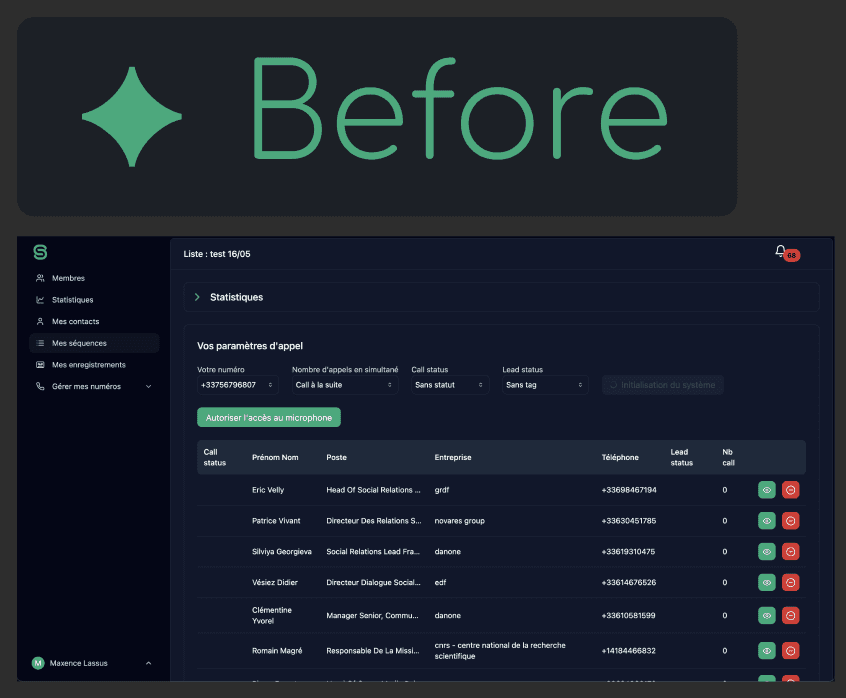
The project began as a "blank slate." There were no existing Figma files, no documented design system, and a very minimal brand identity. My first priority was to establish a foundational UI Kit and a scalable Design System based on their existing logo and primary colors. This ensured that any feature I touched would be built on a consistent, professional framework.
Initially, the goal was a "visual lifting"—a refinement of existing features. However, the scope quickly expanded into a much deeper structural review of the entire user flow.
The Problem
The primary challenge of this project wasn't technical, but process-oriented. As the project evolved, the decision-making circle expanded to include founders, CEOs, and the development team simultaneously. This led to conflicting feedback loops and "design-by-committee" friction.
I had to navigate a landscape where insights were coming from everywhere, including AI-generated design suggestions often leading to "backward" movement where validated solutions were reopened. This created a high-pressure environment where I had to advocate for UX best practices while meeting an extremely tight deadline.
Process
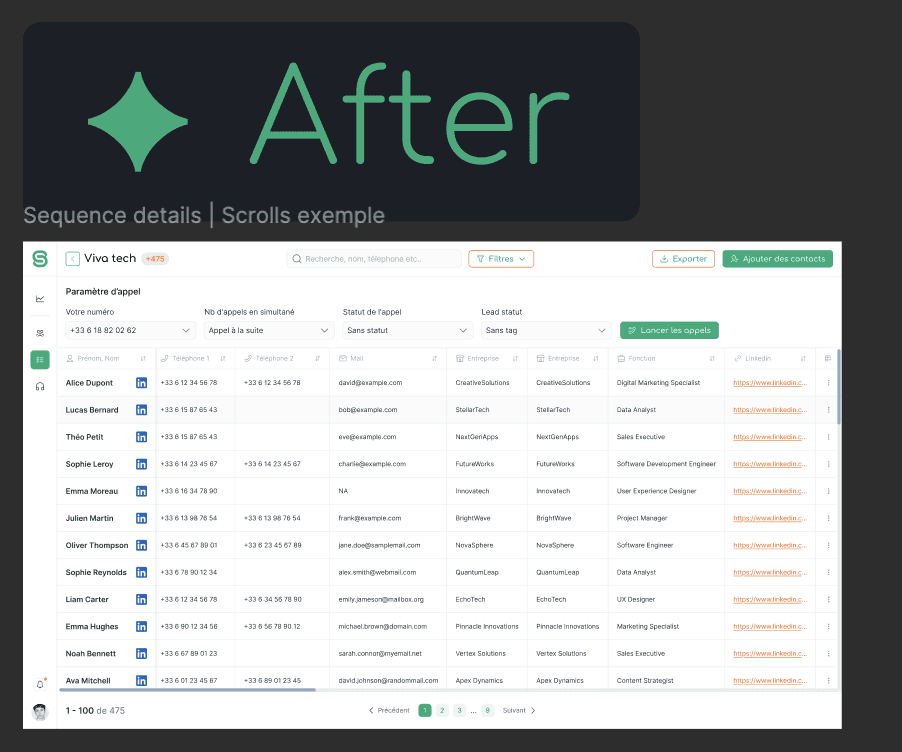
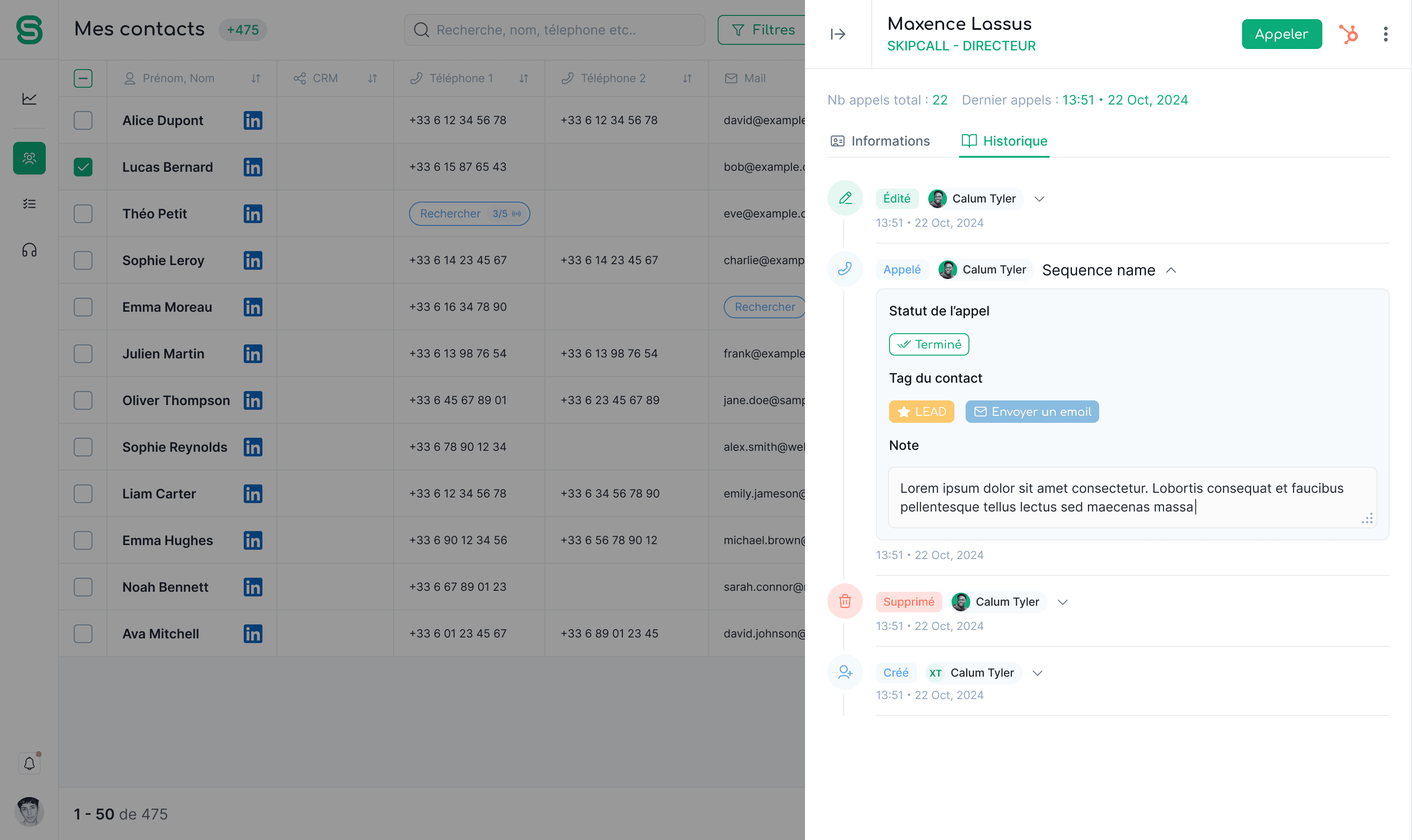
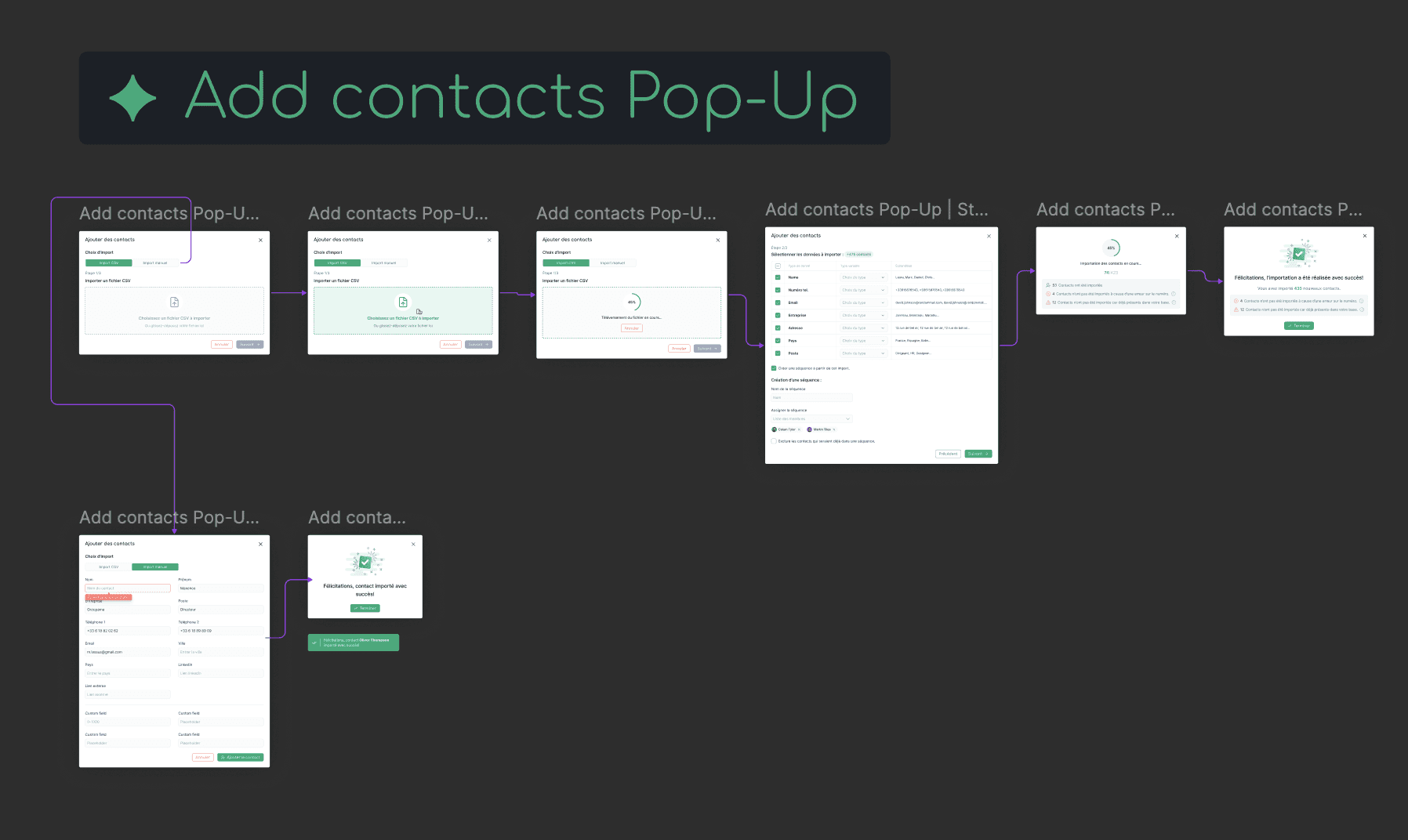
Despite the shifting requirements, I successfully built a complete, scalable design system from scratch. I focused on making the UI as "prospecting-friendly" as possible, ensuring that high-density data and call logs were easy to scan.
When the project shifted from a "lifting" to a full UX refit, I adapted my workflow to manage constant iterations. I maintained the integrity of the design system throughout, ensuring that even as flows changed, the visual language remained coherent and professional.
Key Decisions
I insisted on building a robust component library early on. This turned out to be a lifesaver; when the CTO or founders requested rapid changes to the flow, I was able to pivot the UI almost instantly because the underlying system was modular.
While I had to make significant compromises on the user flow due to internal technical constraints and conflicting visions, I stood firm on the visual hierarchy. I ensured that the founders' original aesthetic vision which they highly valued remained intact, even when the underlying logic was being debated.
Learnings and Why it Matters
SkipCall was a powerful lesson in stakeholder management. It reinforced my belief that a successful product requires a clear "voice" and a structured decision-making process.
The project taught me the importance of the "Designer as Advocate." When development and AI-design suggestions began to clash with UX principles, I learned how to negotiate and find middle ground under pressure. I am proud that I delivered a fully operational, scalable Figma prototype and a refreshed brand kit that the founders loved, providing them with a professional foundation they never had before. It serves as a reminder that a designer's value lies not just in the pixels, but in the ability to bring order to a chaotic process.