ScaleX Invest
2024 - Till now
⎯
Overview
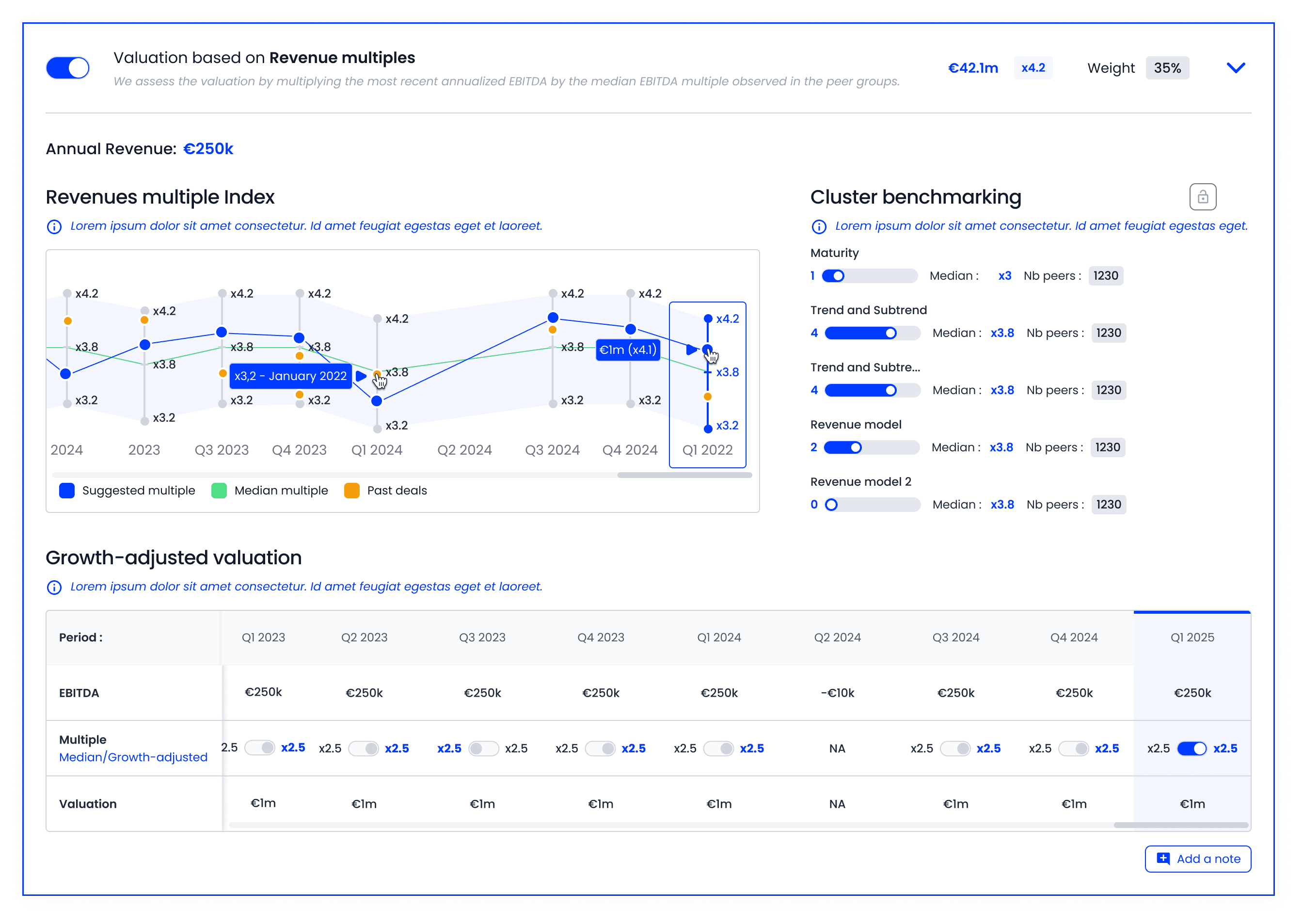
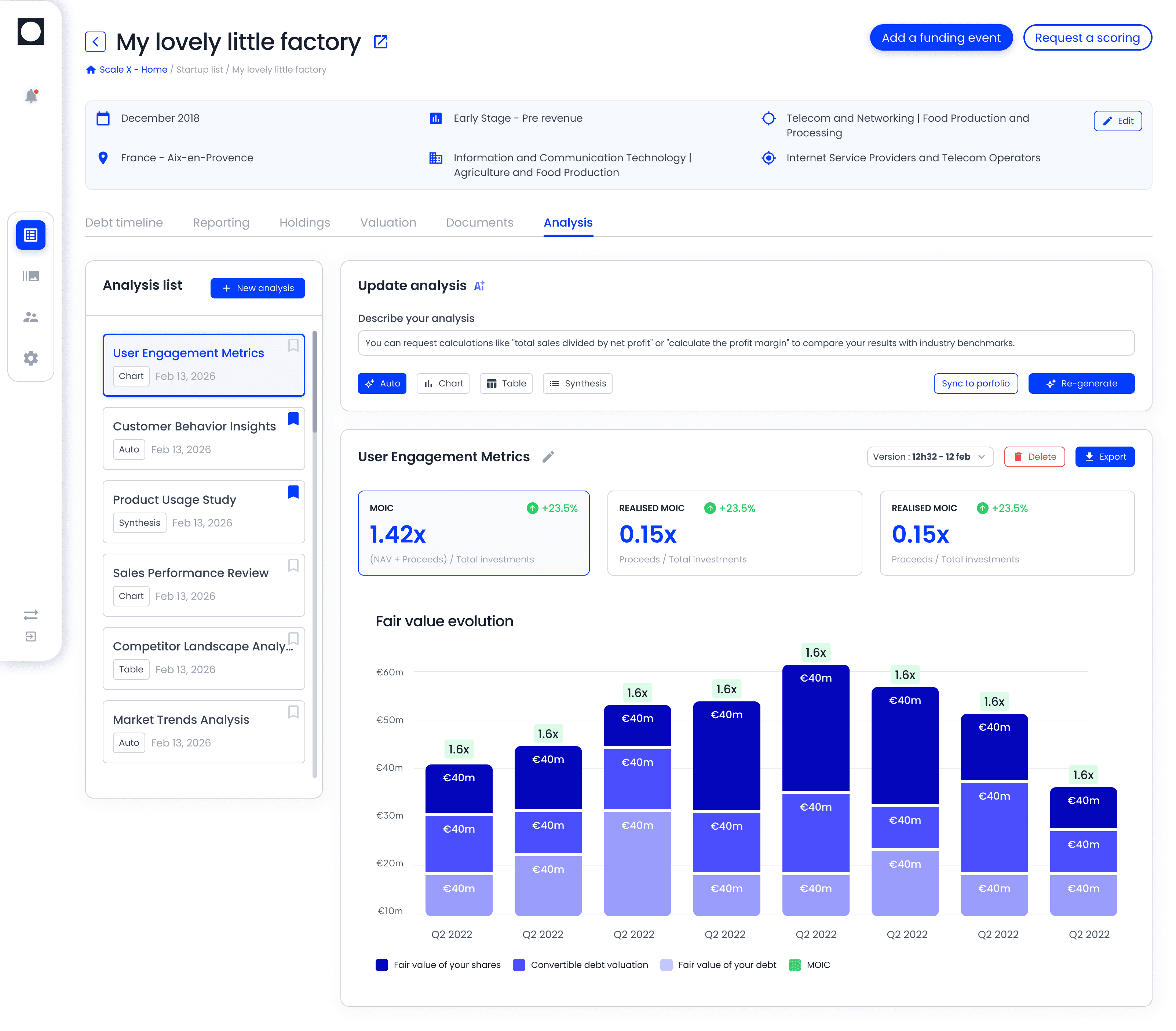
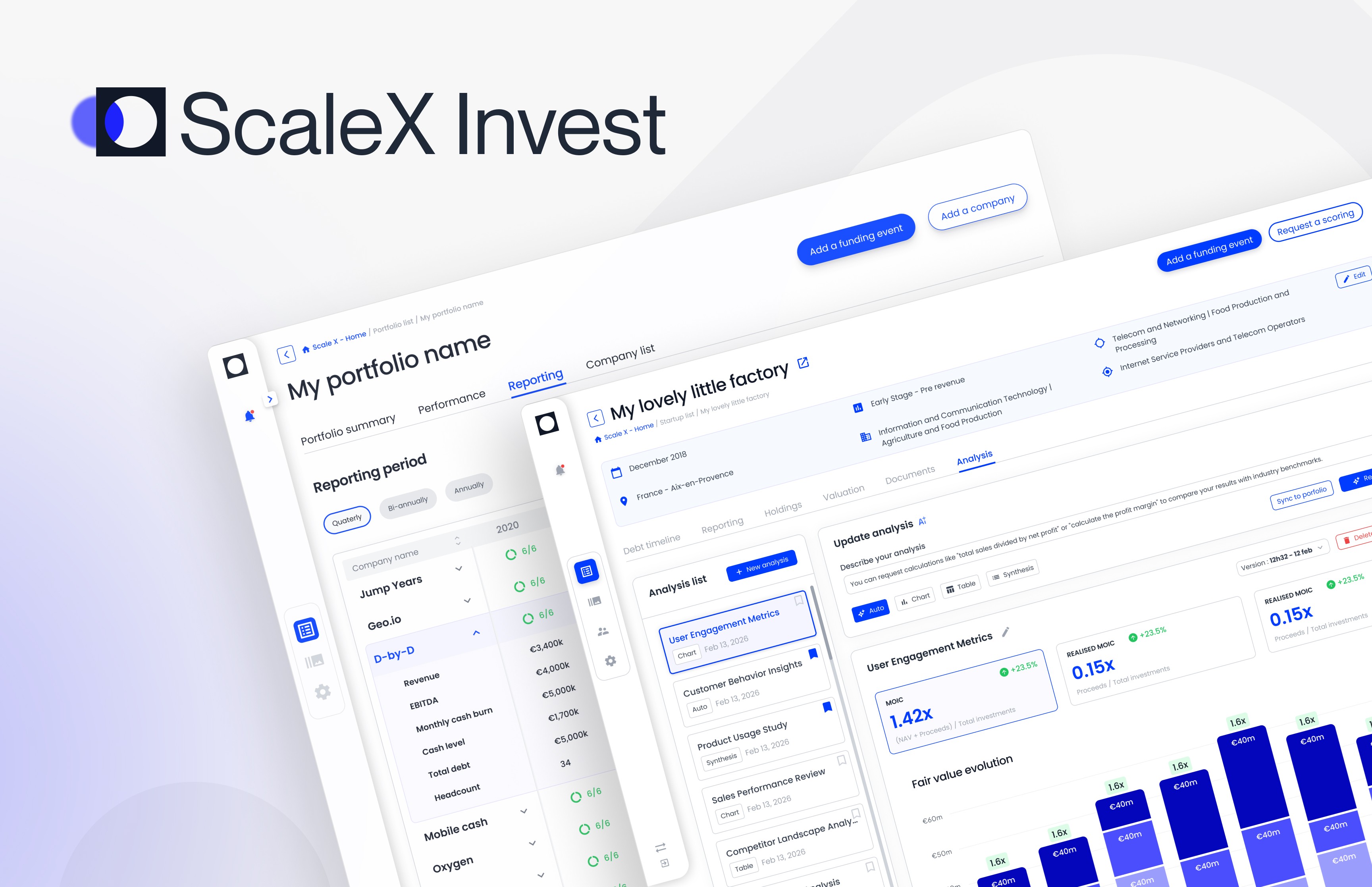
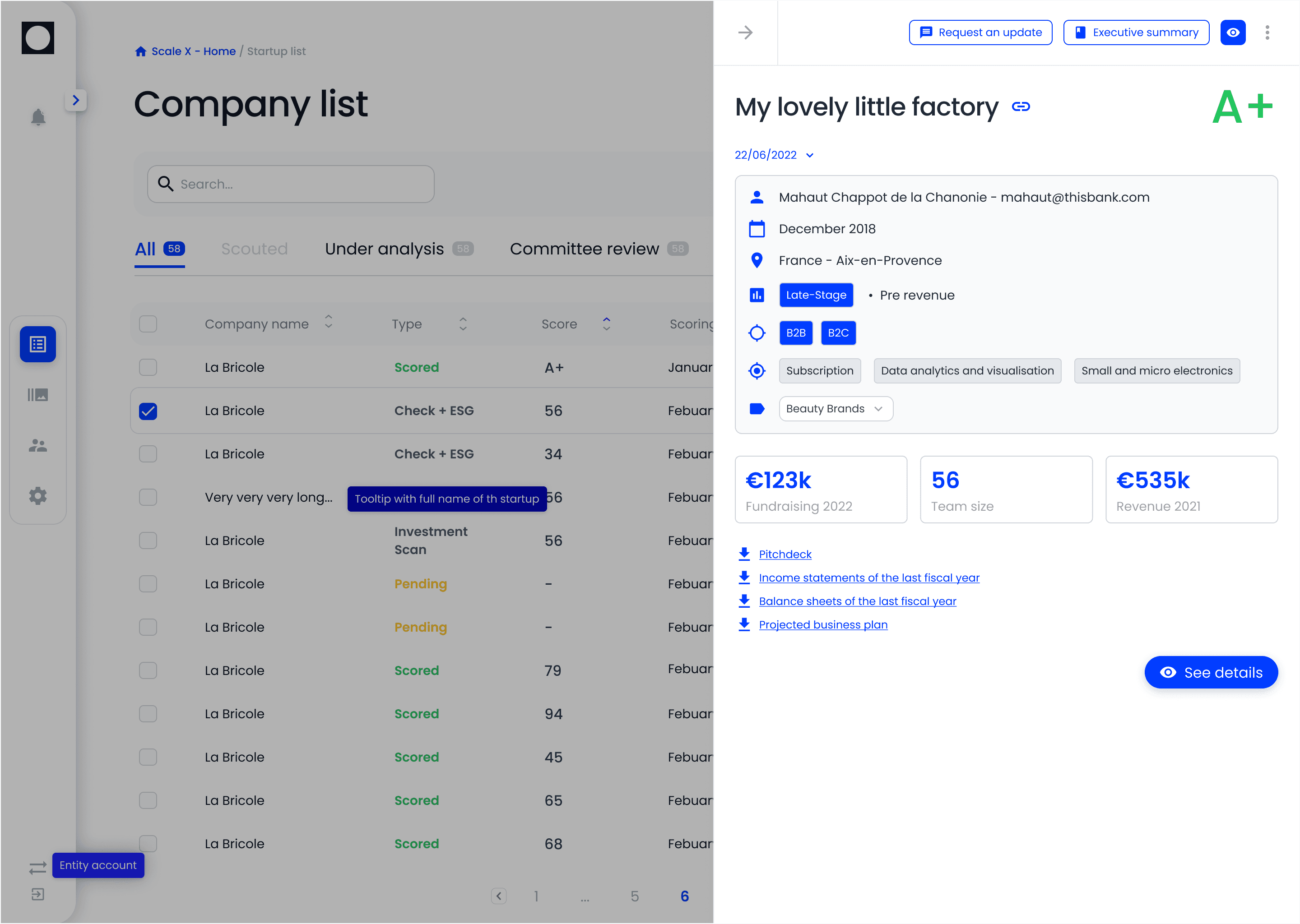
ScaleX Invest is a SaaS platform used by finance professionals, primarily investment fund managers, to analyze, manage and operate complex financial data at scale.
I joined the project in 2024 as a long term UI UX Designer to stabilize the product design, structure a proper design system, and support the continuous development of new features in close collaboration with the product and engineering teams.
Context
When the project started, ScaleX Invest was already an existing and actively developed product.
The previous designer had left, and the team needed someone to take ownership of the design and bring structure, consistency and long term clarity to the UI.
The product had grown quickly, but the design foundation had not. Design decisions were scattered, the Figma file was hard to maintain, and there was no real design system in place. This made feature development slower and more complex for both design and engineering.
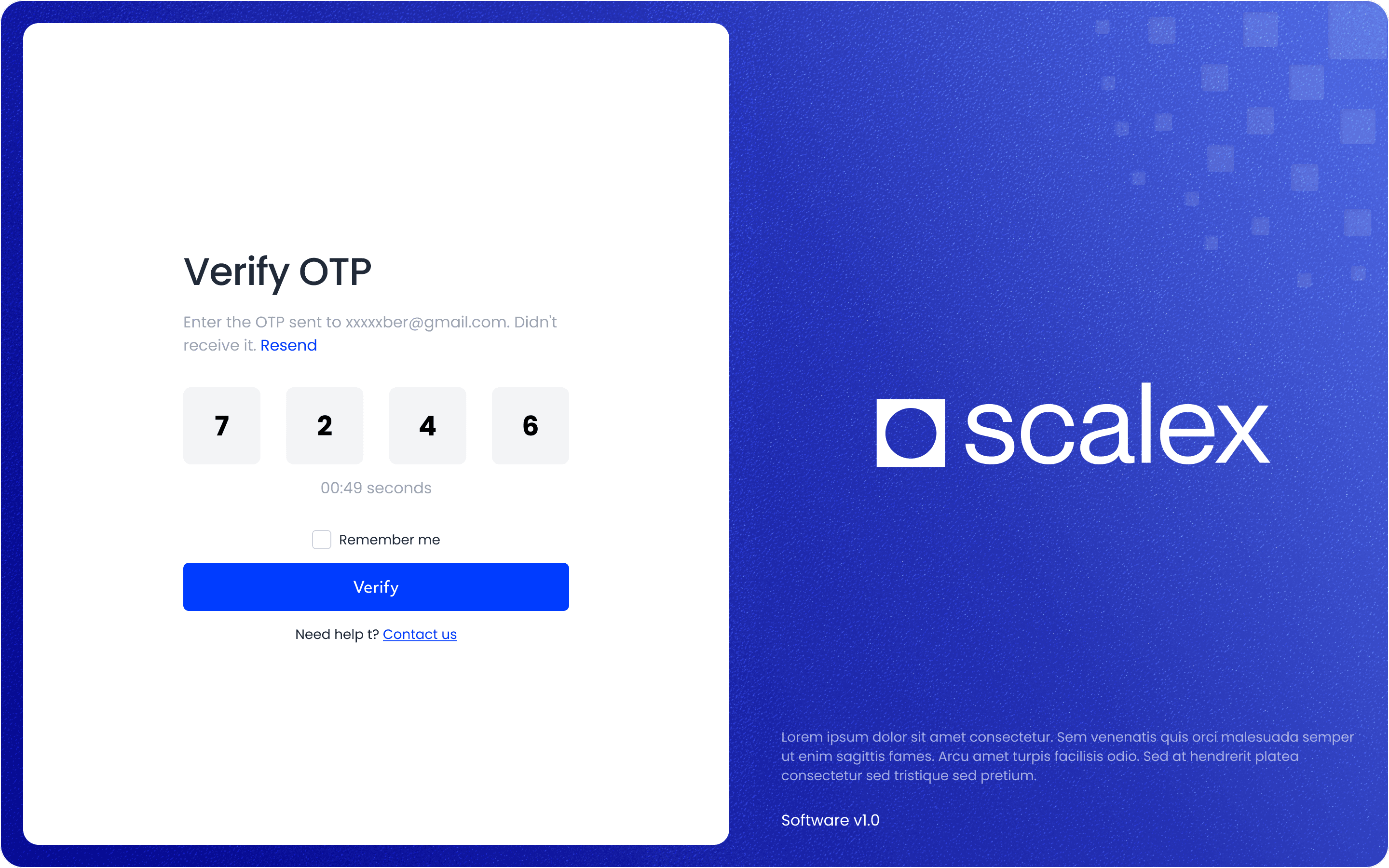
The problem
The main issue was not visual quality alone, but lack of structure.
From a design perspective, the Figma file suffered from missing components, inconsistent patterns, and no clear system to build new features properly.
From a team perspective, creating new features was slow and inefficient. Each new screen required reinventing UI elements, which increased design debt and made handoff to developers harder.
A full redesign of the entire product was not realistic, as the product was already in production and evolving continuously.
My role
Role: UI UX Designer
Responsibilities:
• Taking ownership of the product UI
• Structuring and maintaining the design system
• Designing new features and screens
• Validating UI quality and consistency
• Supporting developers during implementation
I led design decisions and was responsible for validating whether a design solution worked or not, while also producing the designs myself.
Process
I approached the problem step by step, focusing first on foundations rather than visuals.
The first priority was to clean up and restructure the Figma file, then define a clear design system that could support future growth. New features were designed using this system, while existing features were progressively updated over time.
We worked in weekly sprints with regular briefs, design reviews, iterations, and validations before handoff to development. I continued to follow implementation closely to ensure consistency and feasibility.
Key decisions
One of the main decisions was to avoid a full redesign of the product.
Instead of trying to fix everything at once, I chose to:
• Build a solid design system first
• Apply it to all new features
• Gradually refactor existing screens over time
The tradeoff was accepting that the product would not be perfectly consistent at the beginning. However, this approach avoided blocking development and allowed the UI quality to improve continuously without disrupting the business.
An alternative approach would have been a full redesign followed by a large implementation phase, but this was rejected due to cost, risk, and impact on the roadmap.
Outcome and impact
While no public metrics are available, the impact was clear internally.
• Faster design and development cycles
• Improved consistency across new features
• Clearer collaboration between design and engineering
• Reduced friction when building complex interfaces
Stakeholders gained confidence in the design process, and developers had clearer guidelines and assets to work with.
Why this project matters
This project was especially important for me because it pushed me deep into the finance domain.
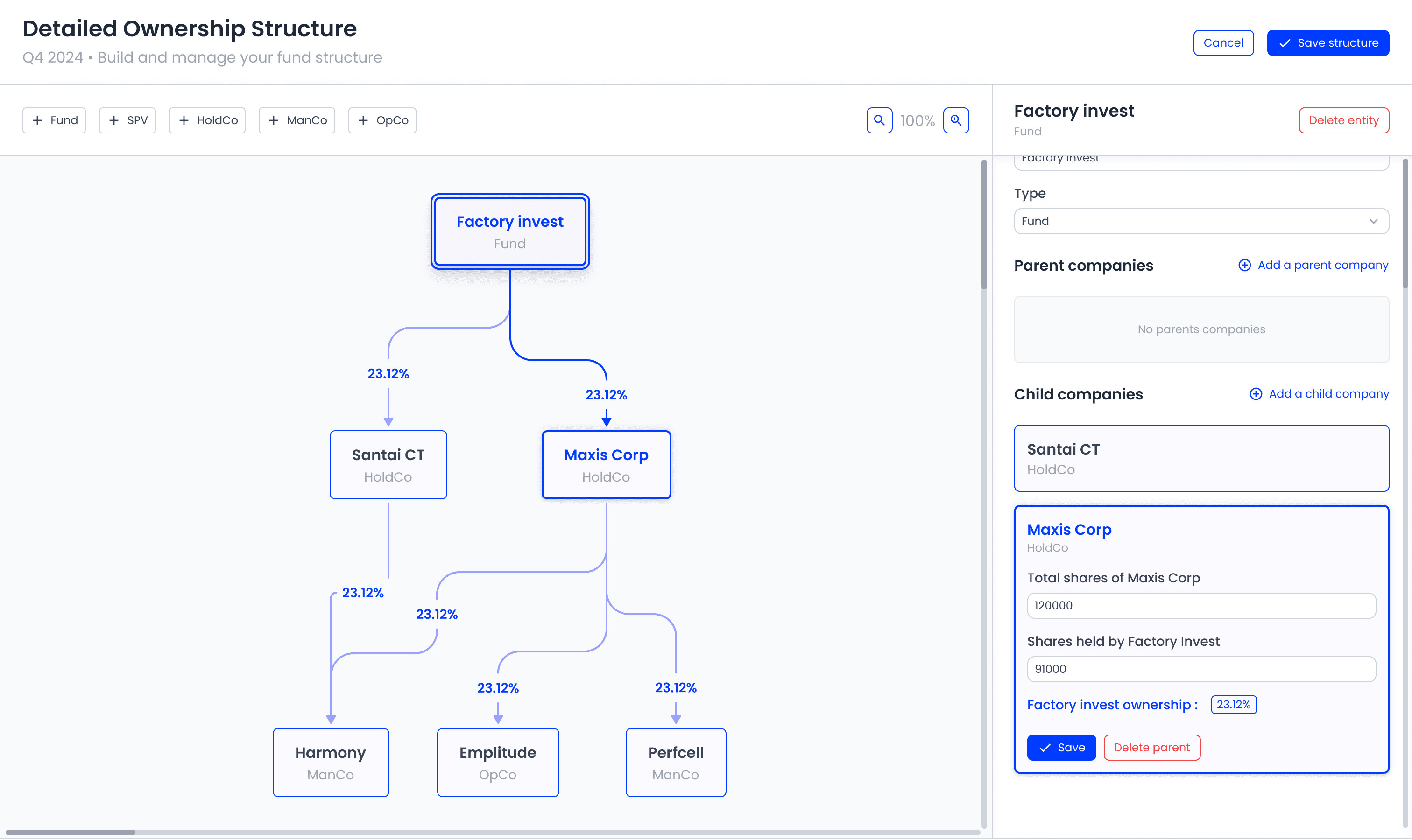
I learned how to design interfaces for complex financial concepts such as ratios, currencies, large data sets, and high precision numbers. It also reinforced the importance of security, clarity, and trust in financial products.
It reflects my way of working as a designer: structured, pragmatic, system oriented, and focused on long term product quality.